What Is the KLOW Stack? BPC-157, TB-500, GHK-Cu, and KPV — Evidence, Risks, and FDA Status
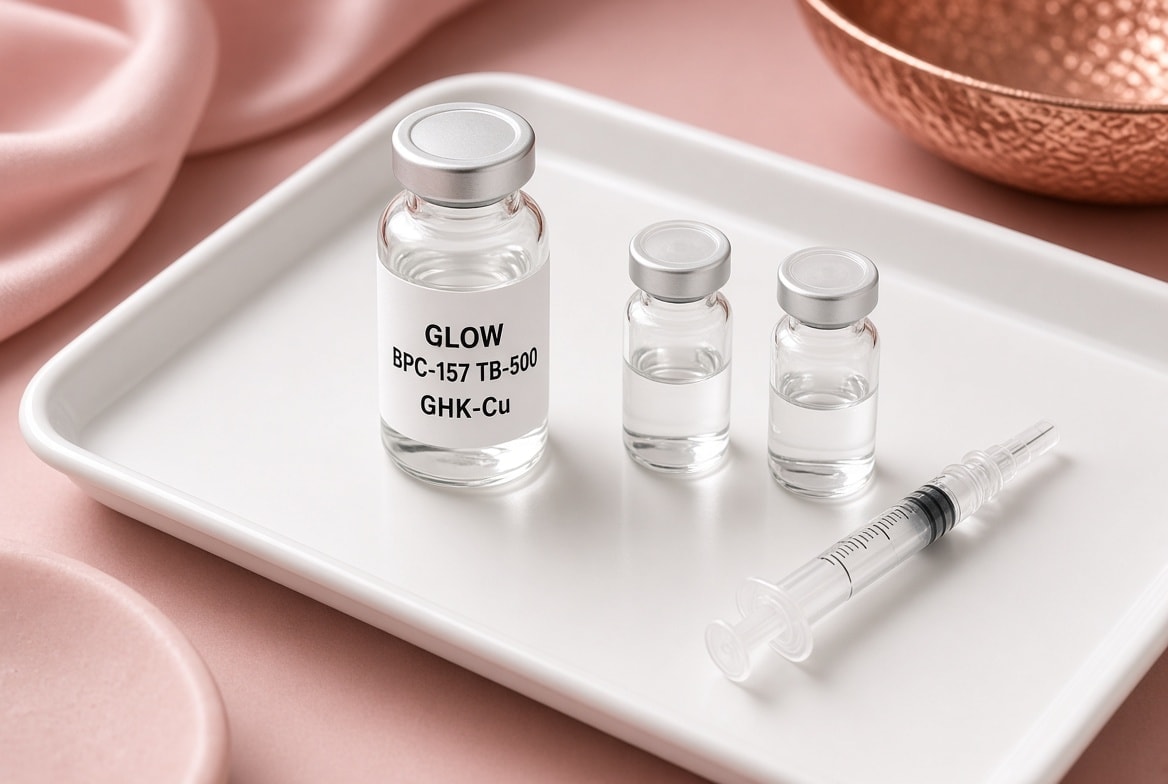
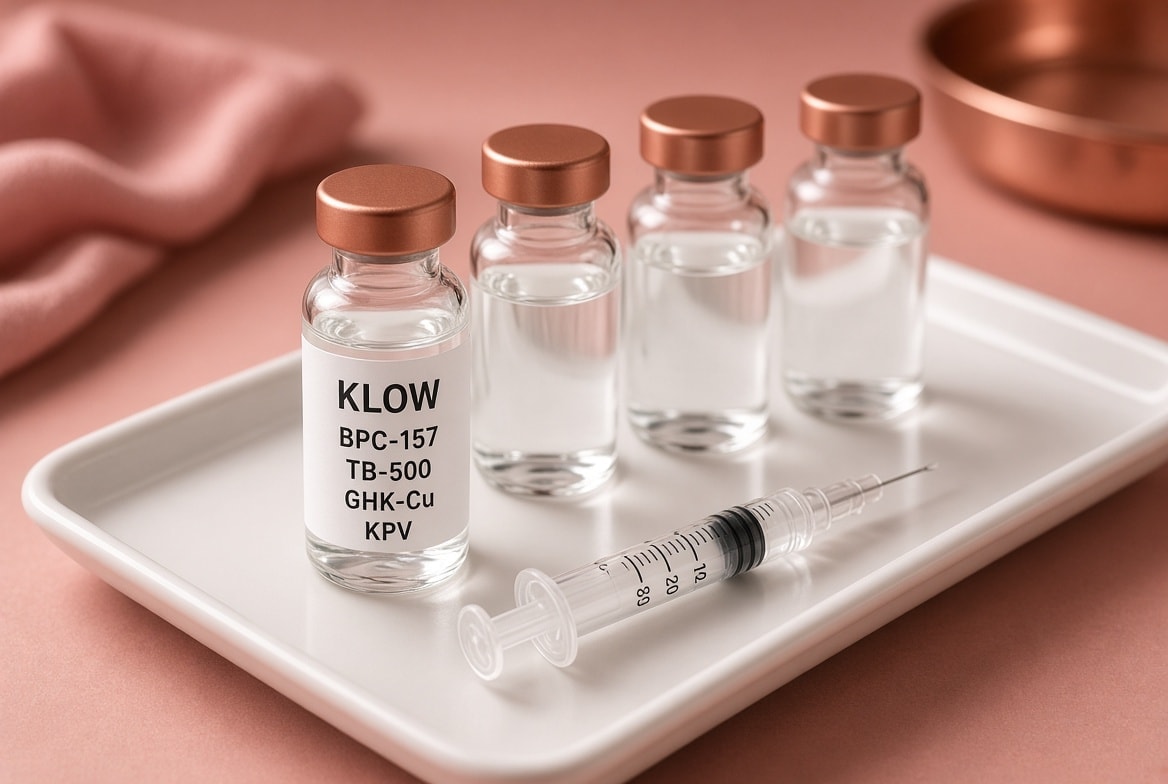
KLOW is a marketing name for four peptides sold together — BPC-157, TB-500, GHK-Cu, and KPV. It is GLOW plus KPV. None of the four is FDA-approved for the repair, glow, or inflammation uses advertised online. Evidence for each piece is limited, and evidence for the four-peptide mix is unknown.
Written for Dominia Health education · Medically reviewed by Ariel Bowerman, BSN, R.N. · Last reviewed September 9, 2026
Tampa, FL – September 9, 2026 – KLOW is a marketing name for four peptides sold together: BPC-157, TB-500, GHK-Cu, and KPV. It is GLOW plus KPV. None of the four is an FDA-approved drug for the "repair + glow + inflammation" uses advertised online. Evidence for each piece is limited. Evidence for the four-peptide mix is unknown. Research-use-only products sold for human use are not recommended.
Quick Answer
Adding KPV does not turn a weakly studied trio into a proven protocol. KPV was part of the same July 2026 FDA advisory discussion as BPC-157 and TB-500. That committee vote is advisory, not FDA approval of KLOW, and not proof the combination heals tissue.
What Is It?
Four separate molecules sold as one protocol:
- BPC-157 — synthetic gastric-peptide fragment
- TB-500 — related to thymosin beta-4
- GHK-Cu — copper tripeptide (often discussed as a topical; also sold as an injection)
- KPV — a short peptide from alpha-MSH, marketed for inflammation and skin
A stack nickname is not a studied drug.
How Does It Work?
Proposed ideas involve tissue signaling (BPC-157 / TB-500), collagen-related pathways (GHK-Cu), and inflammatory signaling (KPV). Those are separate hypotheses on paper. Ingredient evidence ≠ combination evidence.
What Does the Evidence Show?
| Piece | Evidence bucket |
|---|---|
| Each peptide alone | Emerging or unknown in people, depending on route and claim |
| GLOW (three peptides) | Unknown as a unit |
| KLOW (four peptides) | Unknown. No large randomized trial of this mix |
FDA staff at the July 2026 Pharmacy Compounding Advisory Committee meeting said human evidence for several of these peptides — including KPV and TB-500 — was scant or absent for the proposed uses. Advisers still voted narrowly to recommend some for a possible 503A list. Staff concerns are not erased by a vote.
The BMJ reported that six peptides, including BPC-157, TB-500, and KPV, were recommended for a compounding list and that FDA still must decide through rulemaking.
A 2025 HSS Journal review found BPC-157 orthopedic literature is almost entirely preclinical. That paper does not evaluate KLOW.
What We Know
- KLOW is not an FDA-approved product.
- "Not FDA-approved" is not the same sentence as "proven unsafe." It means FDA has not reviewed the stack for safety, effectiveness, or quality the way it reviews approved drugs.
- BPC-157 is prohibited by WADA for tested athletes.
- Four unapproved injectables in one protocol multiply uncertainty about identity, sterility, dose, and interactions.
What We Don't Know
- Whether KPV adds clinical benefit to GLOW.
- Dose, duration, or lab monitoring for the four-peptide mix.
- Whether a given compounded or research vial matches anything in a published paper.
What these sources do not prove: That KLOW is legal to sell as a routine wellness shot, or that it works.
Potential Benefits
Marketing language emphasizes repair, skin, and inflammation. Those outcomes have not been established in large trials of this combination.
Risks and Side Effects
Quality of unapproved peptides can vary. FDA staff have flagged immunogenicity and poor characterization for some of these substances. Injection-site reactions, unknown long-term effects, and sport bans are practical issues.
Contact a clinician for rash, swelling, breathing trouble, or severe pain after an injection. Seek urgent care for anaphylaxis or infection.
Do not use internet "unit" charts. Concentrations vary. Only a prescriber and pharmacy can specify a legal, patient-specific product — if one exists where you live.
FDA Status (as of September 2026)
No KLOW product is FDA-approved. In July 2026, PCAC recommended BPC-157, TB-500, and KPV (among others) for possible 503A listing. GHK-Cu injectable is not an approved KLOW drug. Advisory votes are not final rules. Research-use-only labels do not authorize human treatment.
Comparing the Products
| FDA-approved drug | Compounded KLOW components | Research-use-only vials | |
|---|---|---|---|
| Premarket FDA review | Yes | No | No |
| Human RCT of the four-peptide stack | N/A | Not established | Not for human use |
| July 2026 PCAC vote | N/A | Advisory for some peptides | Does not legalize gray-market sales |
Who May or May Not Be Appropriate
This page does not recommend KLOW. Athletes should check prohibited-substance lists. Anyone considering peptides should ask a licensed clinician what can actually be dispensed today.
From Our Founders
"I read the same July 2026 coverage we used for GLOW, then looked at KLOW pages that only add KPV. One extra peptide is not a new evidence base. Talk to your provider before treating a four-letter stack name as a protocol."
— Ana Argote, BSN, R.N. (ARNP student)
Frequently Asked Questions
What is KLOW? BPC-157 + TB-500 + GHK-Cu + KPV. GLOW plus KPV. Not an FDA-approved name.
Is KLOW stronger than GLOW? That has not been shown in comparative human trials.
Is it FDA approved? No.
Didn't a panel just approve these peptides? Advisers recommended a compounding pathway for some of them. That is not the same as approving KLOW or finishing FDA rulemaking.
Does KPV make it safer? Safety of KPV in this mix has not been established.
Are research vials acceptable? Dominia Health does not recommend research-use-only products for human use.
Bottom Line
KLOW is a four-peptide nickname with unknown combination evidence. A 2026 advisory vote is not FDA approval. Separate each ingredient from the stack, and separate a committee recommendation from a finished rule.
So what? If a clinic sells KLOW as "GLOW plus anti-inflammatory," ask for human trial data on the combination and for the legal status of that vial — approved drug, compounded prescription, or research chemical.
Have questions about options that have labeled evidence? Talk with a licensed healthcare provider. To learn more or request a consultation, visit Dominia Health.
Sources:
- Liang L. BMJ 2026;394:e100422.
- Reuters, July 23, 2026.
- Frieden J. MedPage Today, July 23, 2026.
- BPC-157 orthopedic systematic review. HSS Journal / PMC.
Written by: Dominia Health education
Medically reviewed by: Ariel Bowerman, BSN, R.N.
Published / last updated: September 9, 2026
Explore Topics
Written by
Dominia Health
Content creator and writer sharing insights and stories.