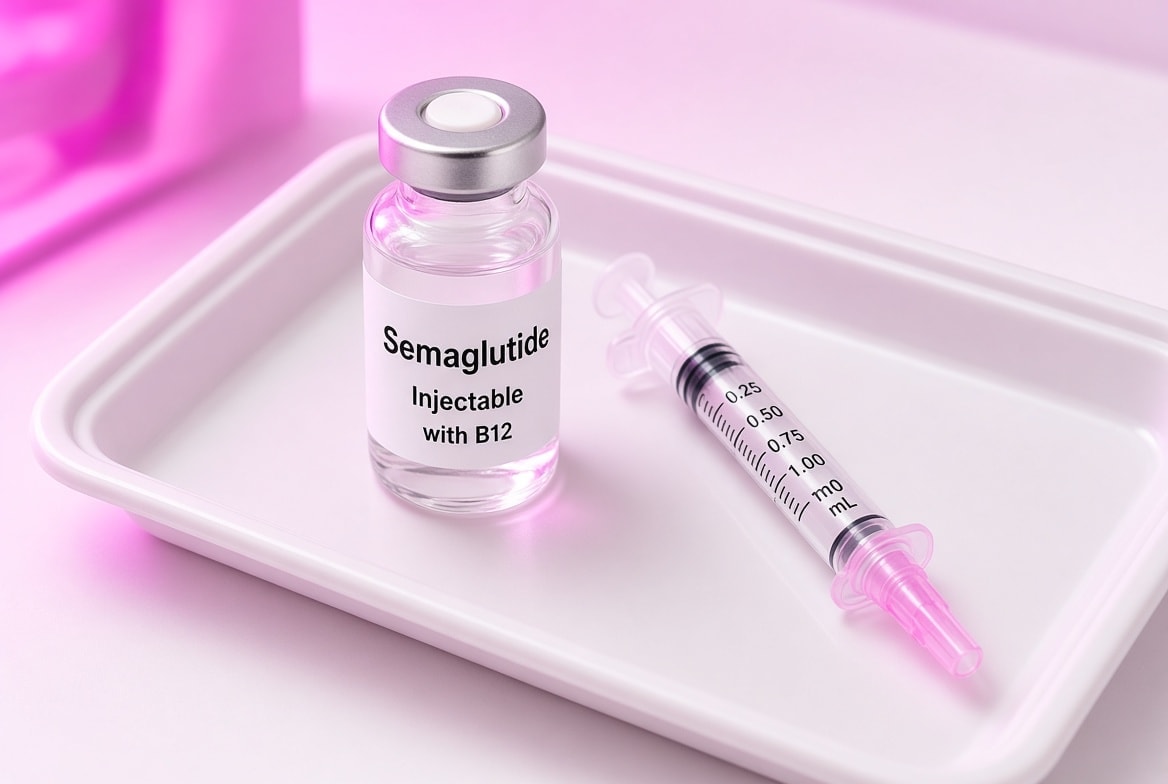
What Are the Benefits and Risks of Semaglutide Injectable with Glycine?
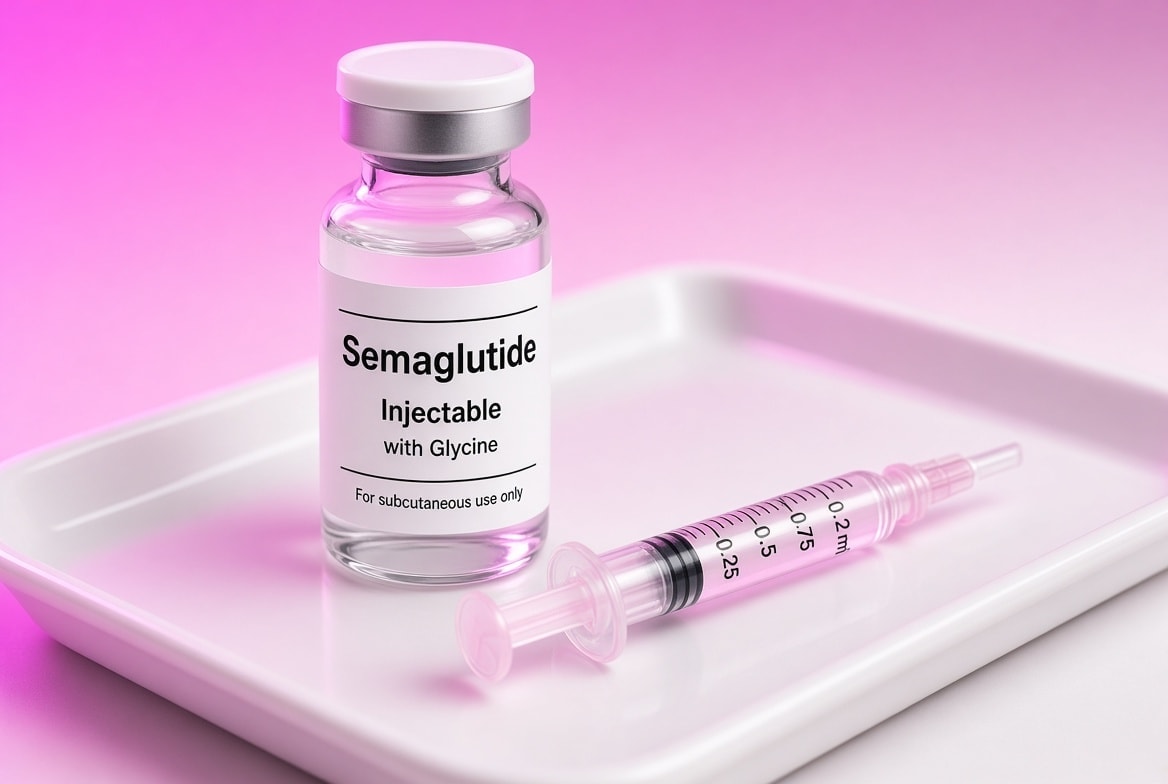
Semaglutide injectable with glycine is a compounded weekly shot that puts semaglutide and glycine in the same vial. It is not FDA-approved. Approved pens do not contain glycine. STEP-1 evidence for 2.4 mg approved semaglutide does not automatically apply to this mix.
Written for Dominia Health education · Reviewed by Ariel Bowerman, BSN, R.N. · Last evidence check: September 2026
Semaglutide injectable with glycine is a compounded weekly shot that puts semaglutide and glycine in the same vial. It is not FDA-approved. Approved pens do not contain glycine. STEP-1 evidence for 2.4 mg approved semaglutide does not automatically apply to this mix. Do not treat glycine as a weight-loss booster.
This page covers standard-strength compounded injectable semaglutide + glycine and the lower-dose "microdose" version, explained in Microdose option: what's different. For the B12 version, see semaglutide injectable with B12.
Last evidence check: September 2026. No dedicated randomized trial of same-vial semaglutide plus glycine has been published, at any strength.
What Is in the Vial
A compounded vial is intended to contain semaglutide plus glycine. Wegovy injection starts at 0.25 mg weekly and maintains at 2.4 mg. Compounded strengths vary. Multi-dose vials raise sterility questions after the first puncture. Use only the prescriber's and pharmacy's instructions. Do not convert internet "units."
Why Clinics Add Glycine Instead of Giving It Separately
Marketing often says glycine is calming or "supports" the shot. Those are separate glycine claims. Putting glycine in the same sterile solution is not the same as a glycine capsule. Ingredient evidence ≠ combination evidence.
What Is Proven vs. Unproven
| Item | FDA-approved injectable semaglutide | Compounded injectable + glycine |
|---|---|---|
| Status | FDA-approved (Wegovy, Ozempic) | Not FDA-approved |
| Typical weekly dose | Start 0.25 mg; Wegovy 2.4 mg maintenance | Varies by pharmacy; "microdose" vials usually below 0.25 mg |
| Weight-loss evidence | STEP-1: −14.9% at 68 weeks on 2.4 mg | No dedicated RCTs of this mix |
| Glycine in same syringe | No | Yes; combo not FDA-reviewed |
| Distinctive signal | Labeled risks | FDA: extras not established; vial dosing errors; 990 compounded-semaglutide AE reports as of May 31, 2026 |
STEP-1 (Wilding et al., NEJM, Feb. 10, 2021): mean weight change −14.9% vs −2.4% placebo at week 68 on 2.4 mg weekly injection. Those figures describe FDA-approved semaglutide at the maintenance dose, not a compounded glycine combination.
Risks That Apply to Any Injectable Semaglutide
| Effect (STEP 1–3, 2.4 mg vs placebo) | Semaglutide 2.4 mg | Placebo |
|---|---|---|
| Nausea | 43.9% | 16.1% |
| Diarrhea | 29.7% | 15.9% |
| Vomiting | 24.5% | 6.3% |
| Constipation | 24.2% | 11.1% |
| Stopped for GI events (STEP-1) | 4.5% | 0.8% |
Serious labeled risks include pancreatitis, gallbladder disease, dehydration/kidney injury, hypoglycemia with certain diabetes drugs, possible retinopathy worsening, and a boxed warning about thyroid C-cell tumors in rodents. Avoid with MTC or MEN2.
Risks Unique to Compounded Vials and Same-Vial Glycine
FDA's compounded-semaglutide alert describes patients drawing 5 to 20 times the intended dose from multi-dose vials. Some were hospitalized. FDA says adding extras (it names B12, B6, L-carnitine, NAD as examples) has not been established as safe or effective. Glycine is the same class of untested add-in even if it is not named in that footnote.
As of May 31, 2026, FDA reported 990 adverse-event reports associated with compounded semaglutide as a class — not a proven rate for every glycine vial.
Lilly's March 12, 2026 letter described a tirzepatide–B12 impurity and listed glycine among untested additives used with compounded tirzepatide. That is not proof of the same chemical problem in semaglutide-plus-glycine. It does show why "it is just an amino acid in the syringe" is not an evidence-based claim.
Research-use-only vials sold for people are not recommended.
Who Might Discuss This with a Prescriber
A clinician may discuss FDA-approved semaglutide if you meet labeled criteria. Same-vial glycine is a different product. Avoid MTC/MEN2, relevant allergy, and research-only listings.
How This Differs from Wegovy or Ozempic
Approved pens have no glycine and use labeled milligram steps. Compounded is not a generic.
Microdose Option: What's Different
Some clinics sell the same semaglutide-plus-glycine mix as a "microdose." That label has no FDA definition. Wegovy injection begins at 0.25 mg once a week and climbs toward 2.4 mg; microdose glycine vials are usually prepared below that 0.25 mg starting point, a range STEP-1 never tested for efficacy.
- Two unknowns instead of one: an untested add-in (glycine) at an untested dose. There is still no combination RCT.
- Same warnings: the labeled semaglutide risks, FDA's multi-dose-vial dosing-error alert and the "extras not established" footnote apply to the microdose vial too.
- Discussion with a prescriber: the microdose version is compounded, usually below the labeled start, and unstudied as a combination. Those three facts belong in the conversation before anyone weighs it against an approved pen.
From Our Founders
"I read STEP-1 next to compounded 'semaglutide with glycine' pages, microdose versions included. The 15% figure is for 2.4 mg approved pens without glycine in the syringe. Talk to your provider about which product you would actually inject." — Ariel Bowerman, BSN, R.N.
Frequently Asked Questions
What are the benefits and risks of semaglutide injectable with glycine? Benefits are inferred from approved 2.4 mg semaglutide, not proven for this mix. Risks include usual GI effects, vial dosing errors, and an unstudied combination.
Has FDA approved semaglutide mixed with glycine? No. Neither the standard nor the microdose glycine vial is FDA-approved.
Is glycine a weight-loss add-on? Not an established one. No trial shows that same-vial glycine improves weight loss with semaglutide.
How small is a "microdose" of semaglutide with glycine? Clinics usually mean below the 0.25 mg weekly labeled start. It is not an FDA-defined dose. See Microdose option: what's different.
Could glycine be taken separately, if at all? A clinician can address glycine on its own. Same-vial mixing is the unreviewed step.
Why does a letter about tirzepatide matter for a semaglutide vial? Lilly's March 12, 2026 letter listed glycine among untested additives used with compounded tirzepatide. It does not prove a problem in semaglutide-plus-glycine, but it shows the add-in is unstudied.
Which side effects show up most in the semaglutide trials? Nausea, in about 44% on 2.4 mg approved semaglutide in STEP 1–3, then diarrhea, vomiting, and constipation. Those are not rates for this compounded mix.
When is semaglutide with glycine a poor fit? With personal or family history of MTC or MEN2, a relevant allergy, or any research-only product.
Is compounded semaglutide with glycine a generic Wegovy? No.
Bottom Line
FDA-approved 2.4 mg semaglutide has established trial data. Compounded injectable with glycine is not FDA-approved, and the microdose version adds an unstudied dose to an unstudied combination. Do not treat glycine as a weight-loss booster.
So what? Ask whether you would receive an approved pen or a compounded glycine vial — and whether glycine, if used at all, can be separate.
Have questions about medical weight management? Talk with a licensed healthcare provider. To learn more or request a consultation, visit Dominia Health.
Sources:
- Wilding JPH, et al. STEP-1. NEJM 2021. https://www.nejm.org/doi/full/10.1056/NEJMoa2032183
- FDA dosing errors alert — compounded semaglutide. https://www.fda.gov/drugs/human-drug-compounding/fda-alerts-health-care-providers-compounders-and-patients-dosing-errors-associated-compounded
- FDA unapproved GLP-1 concerns. https://www.fda.gov/drugs/drug-alerts-and-statements/fdas-concerns-unapproved-glp-1-drugs-used-weight-loss
- FDA compounding Q&A. https://www.fda.gov/drugs/human-drug-compounding/compounding-and-fda-questions-and-answers
- Lilly open letter, March 12, 2026. https://investor.lilly.com/news-releases/news-release-details/open-letter-eli-lilly-and-company-warning-potential-patient
Written by: Dominia Health education
Medically reviewed by: Ariel Bowerman, BSN, R.N.
Published: September 10, 2026 · Updated: October 10, 2026
Explore Topics
Written by
Ariel Bowerman, BSN, R.N.
Content creator and writer sharing insights and stories.