What Are the Benefits and Risks of Tirzepatide Sublingual?
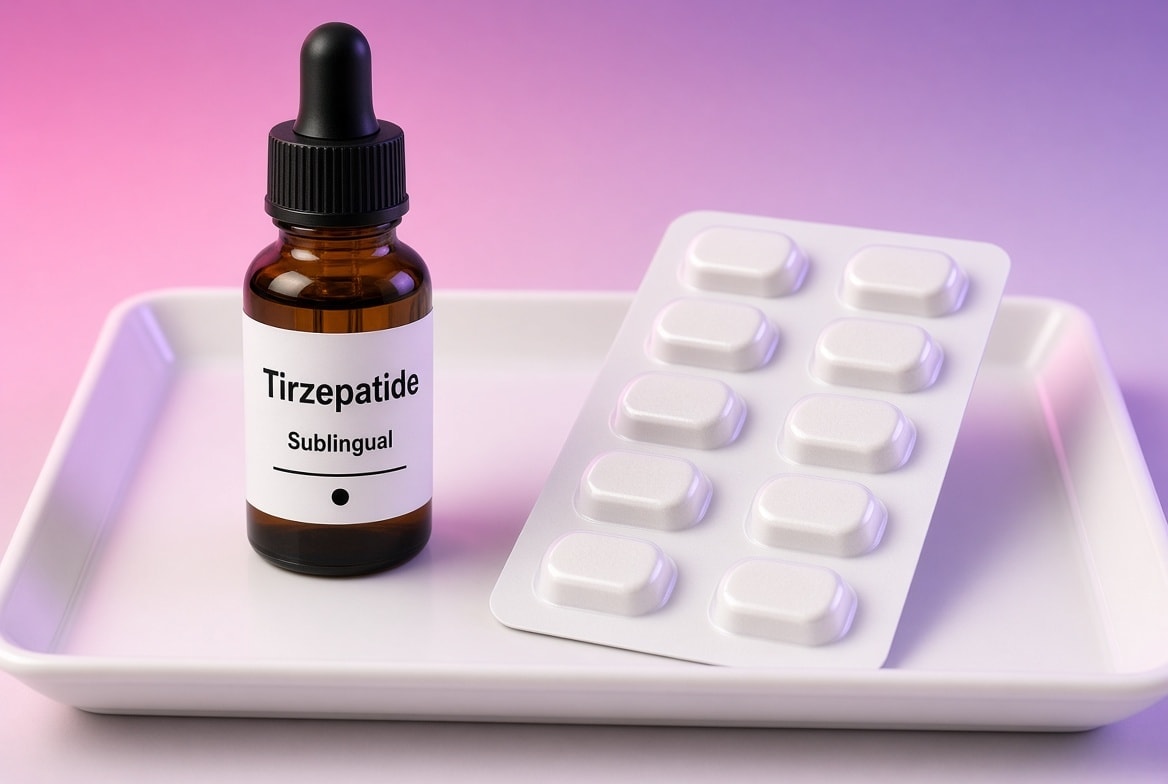
Tirzepatide sublingual is a compounded drop, troche, or dissolving film meant to sit under the tongue. It is not FDA-approved. There is no FDA-approved oral or sublingual tirzepatide. SURMOUNT-1 results for 5–15 mg weekly injections do not automatically apply to this route.
Written for Dominia Health education · Reviewed by Ariel Bowerman, BSN, R.N. · Last evidence check: September 2026
Tirzepatide sublingual is a compounded drop, troche, or dissolving film meant to sit under the tongue. It is not FDA-approved. There is no FDA-approved oral or sublingual tirzepatide. SURMOUNT-1 results for 5–15 mg weekly injections do not automatically apply to this route.
This page covers tirzepatide sublingual, including the clinic-defined "microdose" version: see Microdose option: what's different.
Last evidence check: September 2026. No large randomized trial has shown that compounded sublingual tirzepatide, at any strength, matches approved injections.
What "Sublingual" Means Here
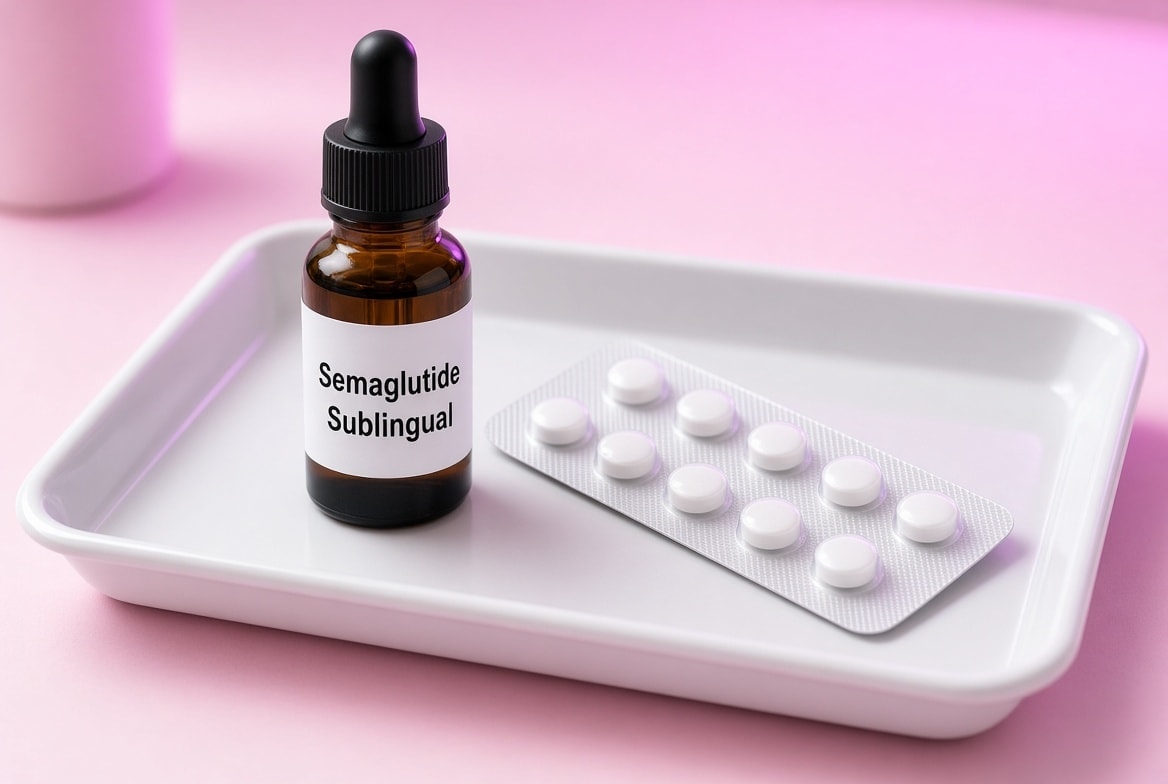
Sublingual means under the tongue. Approved tirzepatide is a weekly injection starting at 2.5 mg. Rybelsus is oral semaglutide with SNAC, swallowed — not tirzepatide and not an under-the-tongue film.
What Is in the Dose — and What Is Not
Approved products are single-dose pens. Compounded films and drops are a different preparation. Do not treat them as "liquid Zepbound." Strength, base, and whether any absorption enhancer is present vary by pharmacy.
Why This Is Not a Studied Needle-Free Zepbound
Weekly injection was studied in SURMOUNT-1. Holding tirzepatide under the tongue was not. Compounded products may lack the kind of delivery system used in approved oral GLP-1 tablets. Absorption, dose equivalence, and long-term quality of compounded troches are unestablished.
What Is Proven vs. Unproven
| Item | FDA-approved injectable tirzepatide | Compounded sublingual |
|---|---|---|
| Status | FDA-approved (Mounjaro, Zepbound) | Not FDA-approved |
| Typical dose | Start 2.5 mg weekly; maintain 5–15 mg | Varies by compounder; "microdose" is a clinic term, not FDA-defined |
| Weight-loss evidence | SURMOUNT-1: about 15–21% at 72 weeks at 5–15 mg | No dedicated RCT of this format |
| Route | Weekly injection | Under the tongue |
| 2026 manufacturer signal | Labeled risks | Lilly warned about untested compounded mixes (published data were injectable B12 samples, not films) |
SURMOUNT-1 (Jastreboff et al., NEJM, June 4, 2022): −15.0% (5 mg), −19.5% (10 mg), −20.9% (15 mg) versus −3.1% placebo at week 72. Those figures describe FDA-approved tirzepatide by weekly injection, not a compounded sublingual product.
What We Know
- Compounded drugs are not reviewed by FDA for safety, effectiveness, or quality before marketing.
- In April 2026 FDA proposed excluding tirzepatide from the 503B bulks list. A proposal is not a finished rule.
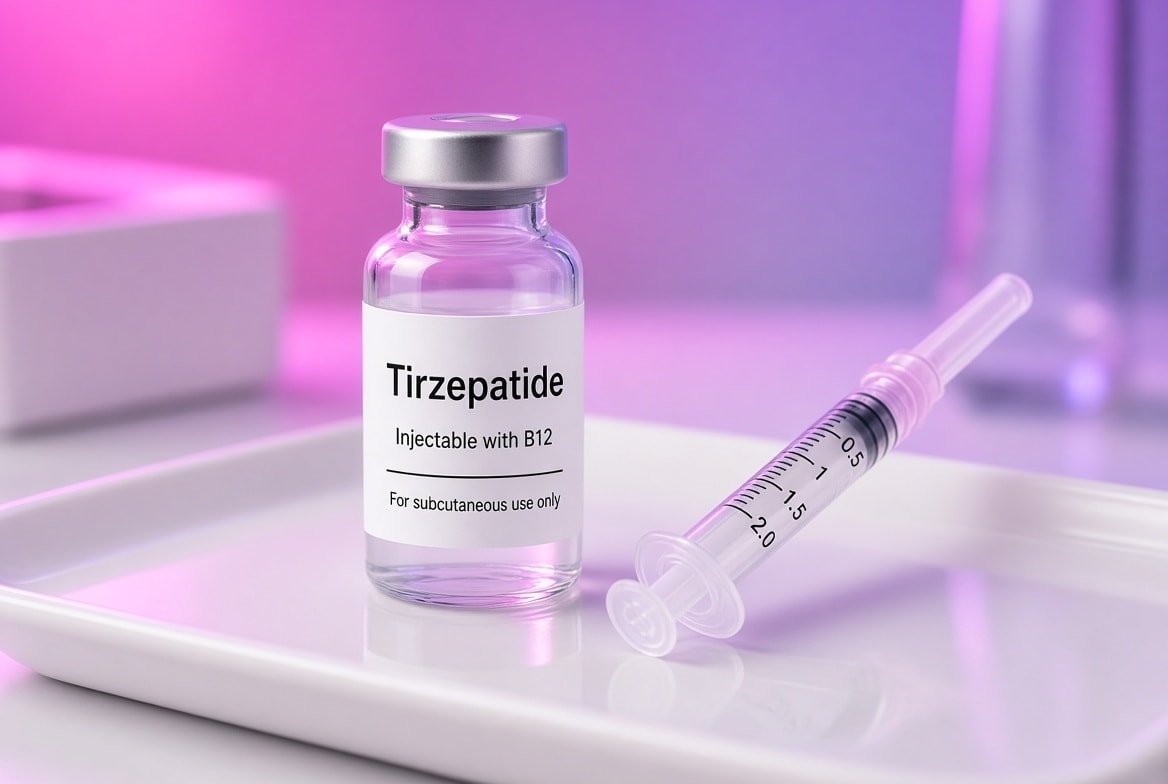
- Lilly's March 12, 2026 letter described a tirzepatide–B12 impurity in tested compounded injectable samples and listed other untested add-ins. That is not a bioavailability study of sublingual tirzepatide.
What We Don't Know
- How much drug from a given compounded film or drop reaches the blood.
- Whether SURMOUNT-1 weight loss appears with this route, or at an unstudied under-the-tongue amount.
- Long-term quality of daily compounded products.
What these sources do not prove: That "tirzepatide under the tongue" equals Zepbound without a needle.
Potential Benefits
Needle-free dosing is the appeal. Preference is not proof. Established weight-loss evidence remains on FDA-approved weekly injection at studied doses.
Risks
If the drug is absorbed, class risks still apply: nausea, vomiting, diarrhea, constipation, pancreatitis, gallbladder disease, dehydration, hypoglycemia with certain diabetes drugs, and a boxed warning for rodent thyroid C-cell tumors. Avoid with MTC or MEN2.
Format-specific issues: unknown absorption, under- or over-strength, untested flavors or bases, and research-use-only listings.
| Effect (SURMOUNT-1 injection) | 5 mg | 10 mg | 15 mg | Placebo | Applies automatically to sublingual? |
|---|---|---|---|---|---|
| Nausea | 24.6% | 33.3% | 31.0% | 9.5% | Unknown |
| Diarrhea | 18.7% | 21.2% | 23.0% | 7.3% | Unknown |
| Stopped drug for an AE | 4.3% | 7.1% | 6.2% | 2.6% | Unknown |
Contact a clinician for severe vomiting or dehydration. Seek urgent care for severe lasting abdominal pain or a serious allergic reaction. Do not invent a home milligram schedule.
FDA Status (as of September 2026)
No sublingual tirzepatide product is FDA-approved. Compounded films are not generics of Zepbound or Mounjaro. Research-use-only products are not recommended for human use.
Who May Discuss This with a Prescriber
A clinician may discuss approved weekly injection if you meet labeled criteria. This page does not recommend compounded sublingual tirzepatide at any strength. Avoid research vials and "Zepbound without needles" claims.
Microdose Option: What's Different
Approved tirzepatide starts at 2.5 mg once weekly by injection and is increased toward 5, 10, or 15 mg. Clinics use "microdose" for amounts below that labeled start, given by a route that is not on the label at all. FDA does not define the term.
- Two departures from the trials: a different route and a smaller, unstudied amount. SURMOUNT-1 says nothing about either.
- Same unknowns, sharper: absorption, actual strength, and purity are already unestablished for sublingual tirzepatide; a smaller labeled amount does not settle them.
- Same warnings: class risks apply if the drug is absorbed, and the research-use-only caution is unchanged.
From Our Founders
"I read SURMOUNT-1 next to compounded sublingual and 'sublingual microdose' ads. The 15–21% figures are for 5–15 mg weekly pens, not an under-the-tongue film. Talk to your provider about which product you would actually take." — Ana Argote, BSN, R.N. (ARNP student)
Frequently Asked Questions
What are the benefits and risks of tirzepatide sublingual? Benefits are unproven for this format. Risks include unknown absorption and usual tirzepatide warnings if the drug is absorbed.
Does FDA approve any under-the-tongue tirzepatide? No.
Is there an approved oral tirzepatide? No. Rybelsus is oral semaglutide, not tirzepatide.
How small is a sublingual tirzepatide "microdose"? It is not an FDA-defined dose. The approved injection starts at 2.5 mg weekly; microdose products are usually below that. See Microdose option: what's different.
Is weight loss proven with this route? Not in large trials of this compounded route.
Could I swap Zepbound for a daily troche? Do not assume equivalent exposure. Ask the prescriber.
Is a research-peptide tirzepatide film acceptable? Dominia Health does not recommend research-use-only products for human use.
Is compounded tirzepatide a generic Zepbound? No.
Bottom Line
Compounded tirzepatide sublingual is not FDA-approved, at standard or microdose amounts, and has no SURMOUNT-style proof. FDA-approved tirzepatide is a weekly injection.
So what? If the pitch is "Zepbound without needles," ask whether any approved oral tirzepatide exists (it does not) and what product you would actually put under your tongue.
Have questions about medical weight management? Talk with a licensed healthcare provider. To learn more or request a consultation, visit Dominia Health.
Sources:
- Jastreboff AM, et al. SURMOUNT-1. NEJM 2022. https://www.nejm.org/doi/full/10.1056/NEJMoa2206038
- Lilly SURMOUNT-1 press release. https://investor.lilly.com/news-releases/news-release-details/lillys-surmount-1-results-published-new-england-journal-medicine
- FDA unapproved GLP-1 concerns. https://www.fda.gov/drugs/drug-alerts-and-statements/fdas-concerns-unapproved-glp-1-drugs-used-weight-loss
- FDA compounding Q&A. https://www.fda.gov/drugs/human-drug-compounding/compounding-and-fda-questions-and-answers
- Lilly open letter, March 12, 2026. https://investor.lilly.com/news-releases/news-release-details/open-letter-eli-lilly-and-company-warning-potential-patient
Written by: Dominia Health education
Medically reviewed by: Ariel Bowerman, BSN, R.N.
Published: September 10, 2026 · Updated: October 10, 2026
Explore Topics
Written by
Ana Argote, BSN, R.N.
Content creator and writer sharing insights and stories.